Biomimic Fashion
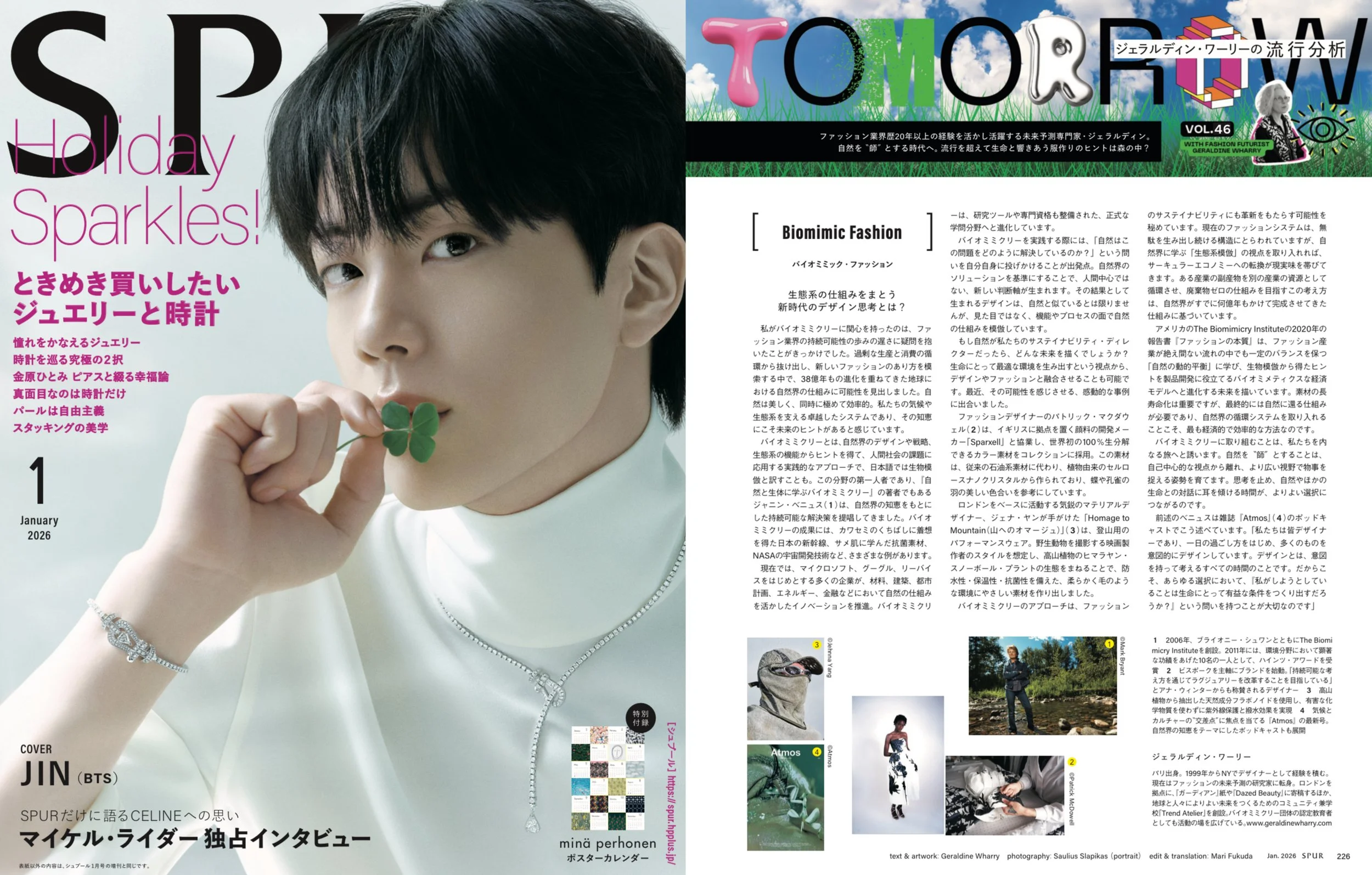
Image courtesy of Spur Magazine
The following article was originally published in SPUR magazine in my Tomorrow column.
My relationship with Biomimicry started because I felt frustrated with the slow pace of sustainable change in the fashion system. I knew there were other forms of intelligence and tangible maps for a fashion and design future free from overproduction, overconsumption, and trend hype at the cost of our planet and people. As it turns out, we are surrounded by genius as the descendants of organisms that have managed life on this planet for 3.8 billion years, able to do everything, sustain themselves and thrive. Nature has already solved many of the problems we face today.
But aside from indigenous communities, most of us have deeply lost our way in recent centuries. The modern world has created an extinction of cultural intelligence and practical skills for all things related to nature’s solutions. Nature is not just beautiful, healing, inspiring. It is efficiency. The creation of life is an automation system far more supreme than any artificial intelligence agent out there. It functions on complex, interconnected and quantum levels, constantly performing a multitude of ecosystem services making our climate and ecosystems liveable, mutualistic and adaptable.
The paradox is today, designers, industrial designers, product designers, engineers, architects (to name a few) dedicated to creating our built environment very rarely consult the natural world. It’s not something we are taught. We don’t know how ecosystems function successfully beyond basic biology classes and therefore don’t consider how they could offer mentorship.
What is Biomimicry?
Biomimicry is the practice of looking to nature’s designs and strategies, ecosystems, organisms, to solve complex human, design and systemic challenges. Biologist, author of Biomimicry: Innovation Inspired by Nature and co-founder of the Biomimicry Institute Janine Benyus popularized biomimicry. Biomimicry innovations range from the Japanese Shinkansen Bullet Train taking its cues from a Kingfisher, an Owl and a Penguin, to shark skin-inspired antimicrobial surfaces used for anti-germ fabric for hospitals, by Nasa, Speedo and Michael Phelps during the Olympics to the ubiquitous Velcro, to wind turbines, all the way to the circular economy.
Today in the hallways of innovation and design in companies ranging from Microsoft to Estee Lauder, Google to IDEO, Jaguar Land Rover to Levi’s, thousands of biomimics are applying nature’s time-tested designs and solutions to materials, urban planning, architecture, construction, manufacturing, design, energy systems, chemical and structural engineering, finance, organizational development. Biomimicry is now a formalized discipline, with a methodology, research tools, academic education degrees and professional certifications.
If you were to harness Biomimicry, when making a decision, you would ask yourself and your team: “Has nature already solved what I’m trying to solve, and how?”. As a biomimic, Nature becomes your sense of measure for what works and provides a successful solution. A biomimicry-led design may not even ‘look’ like nature, but it will fully emulate its strategies and performance, versus focusing on nature-inspired aesthetics.
What if Nature was both our Creative and Sustainability Director?
How can we blend design and fashion with the act of creating conditions conducive to life on earth? Recently I’ve come across two inspiring examples receiving acclaim.
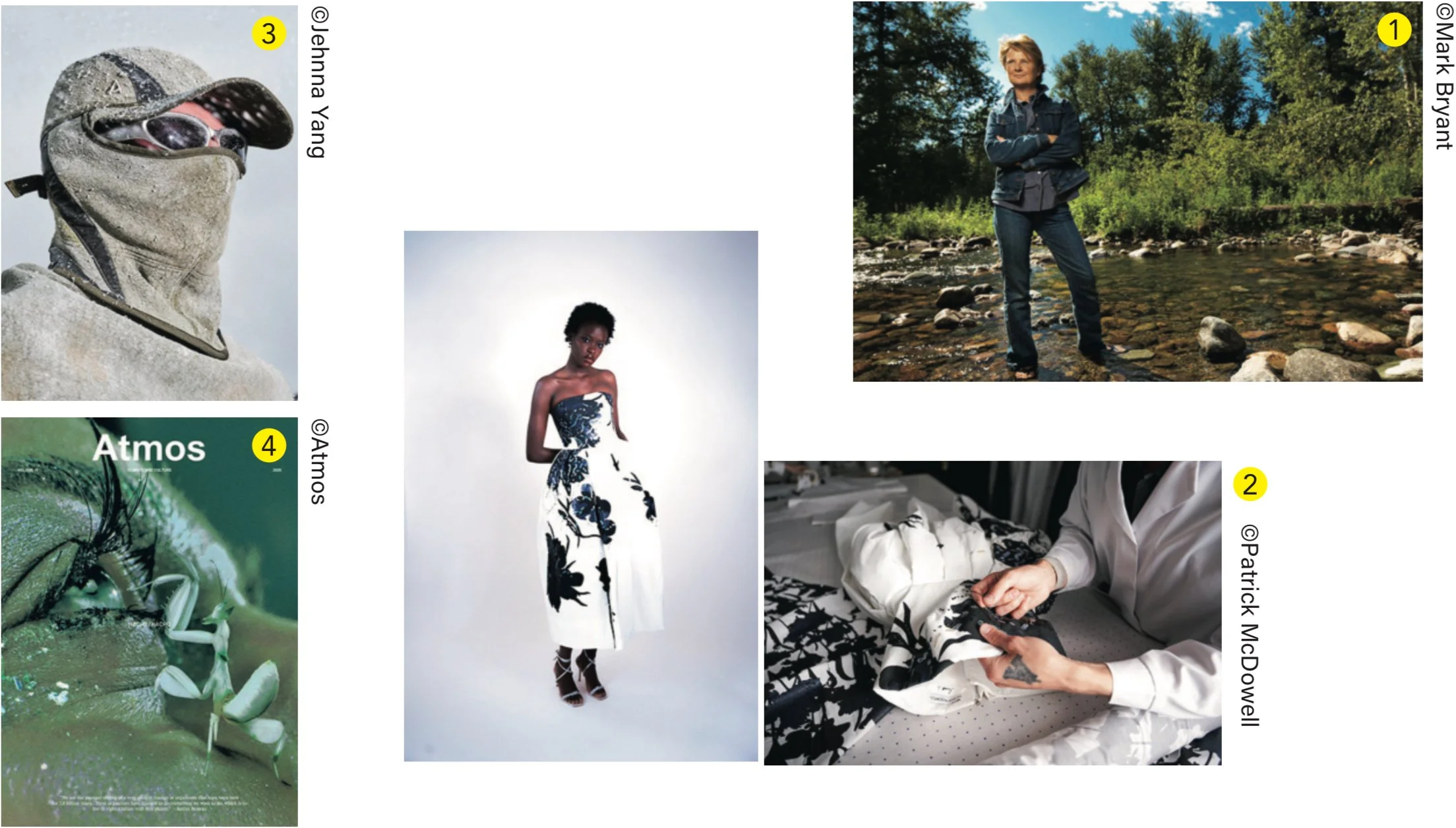
Fashion Designer Patrick McDowell collaborated with Sparxell, the world's first 100% biodegradable colour platform, to explore sustainable reflective effects in fashion. Sparxell's pigments, made from plant-based cellulose nanocrystals and inspired by butterfly wings and peacock feathers, offer an alternative to petrochemical materials. As McDowell states on Fashion Network: "This is about making sustainability tangible. One piece shows what's possible at the highest level of craft, the other makes that possibility part of everyday life."
"Homage to Mountain" by Jehnna Yang is an award-winning alpine performance apparel that creates eco-friendly wear with wildlife filmmakers in mind, by biomimicking the survival strategies of alpine plants, particularly the Himalayan snowball plant with its fur-like hairs providing waterproofing, insulation, and antibacterial qualities. The innovative fabric incorporates flavone, a naturally occurring compound from alpine species, to achieve water repellence and UV resistance without harmful chemicals, celebrating nature's resilience.
What if Biomimicry helped change the fashion system?
From the perspective of shifting the fashion system, its current wasteful feedback loops and the fast fashion chokehold we’re in, there is probably no greater biomimicry inspired system than the Circular Economy. This “ecosystem mimicry” approach envisions future societies, communities and industrial complexes operating with zero waste, where byproducts from one industry become raw materials for another, eliminating the consumer waste currently ending up in landfills and oceans as microplastics.
The Nature of Fashion report by the Biomimicry Institute describes the future of the fashion industry as one where we design “for nature’s dynamic equilibrium” and become a “Biomimetic Fashion Economy”. It proposes biomimicry as essential for fashion's circular economy transition, noting that while keeping materials in use longer is important, materials inevitably escape into the environment. Since nature has already perfected global waste recovery systems, working with its solutions offers the fastest and most economical path to implementing fashion's circular economy transformation.
Parting Thoughts
Working with biomimicry provokes an internal journey. The choice to see nature as our teacher requires us to pivot from self-importance to “quieting our human cleverness”. We learn to pause being in our heads hunting for answers and instead spend time connecting with our own wilderness, in deeper conversation with the organisms and ecosystems around us. Benyus recently explained in a podcast interview with Atmos: “we’re all designers. You know, you design your day, you design a party, you design lots of things. Design is any time you think with intention. And so, with each choice, the big question is: Does what I am about to do create conditions conducive to life?”
By Geraldine Wharry