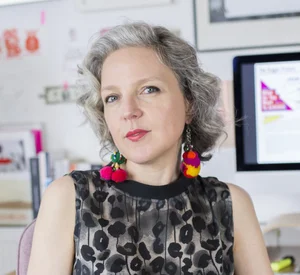
Pioneers Reflect: What Defined 2025 and Will Shape Tomorrow
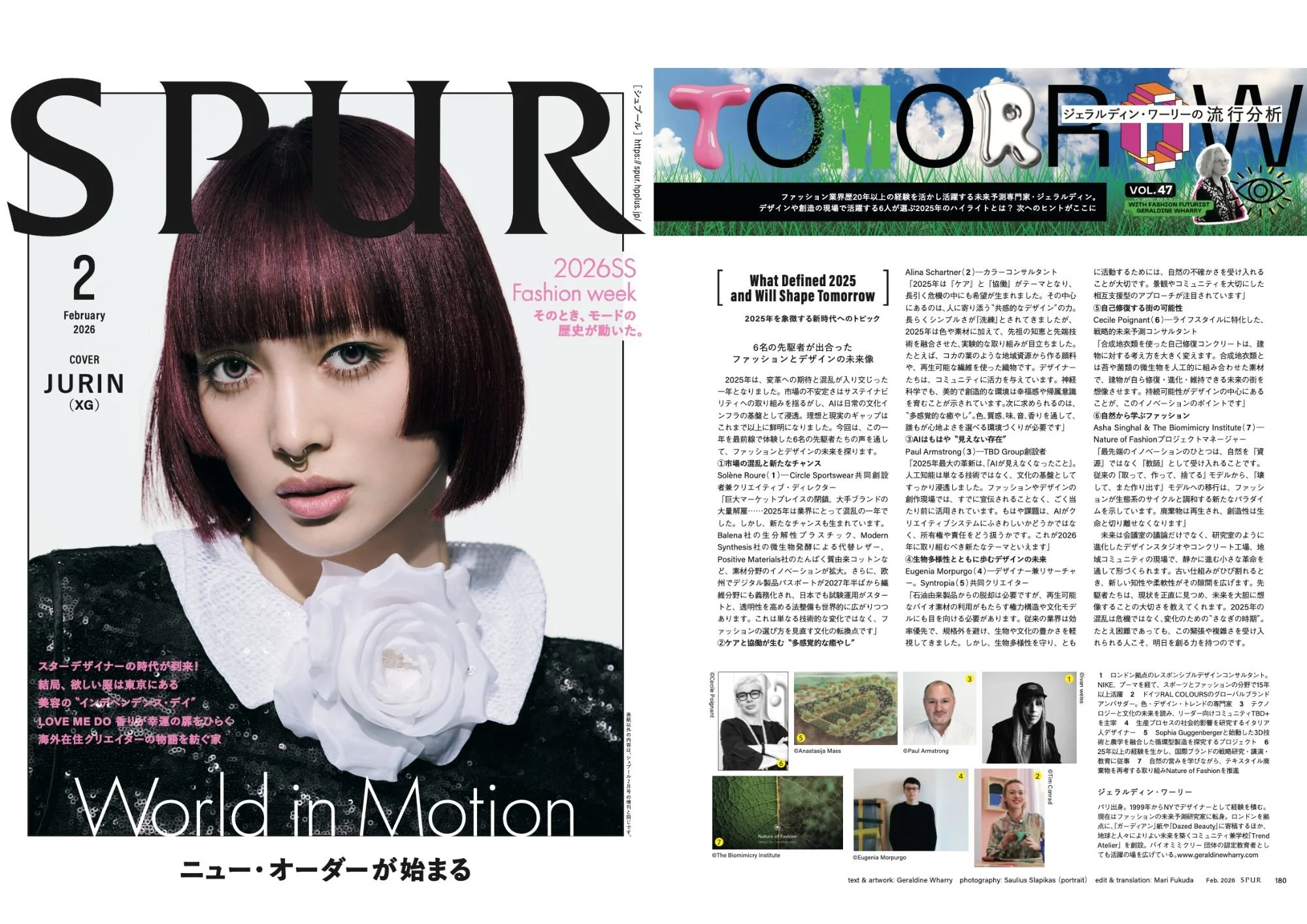
Image courtesy of Spur Magazine
The following article was originally published in SPUR magazine in my Tomorrow column.
As we close 2025, a year that promised transformation yet delivered complexity, I find myself reflecting on the fashion and design industry's evolution. Market volatility challenged sustainability commitments, AI became cultural infrastructure, and tensions between regenerative ideals and economic realities reached a crescendo.
In this retrospective, I've gathered insights from a diverse group of pioneers who witnessed 2025's defining moments firsthand. Their perspectives reveal not just what happened, but what it means for our future. From AI's cultural integration into everything, to the growing demand for radical transparency, to the continued revolution of bio-based materials, to practices of care for biodiversity and communities, to the embrace of soulful experimentation, ancestral wisdoms and healing practices – our contributors illuminate a year where positivity persisted no matter what.
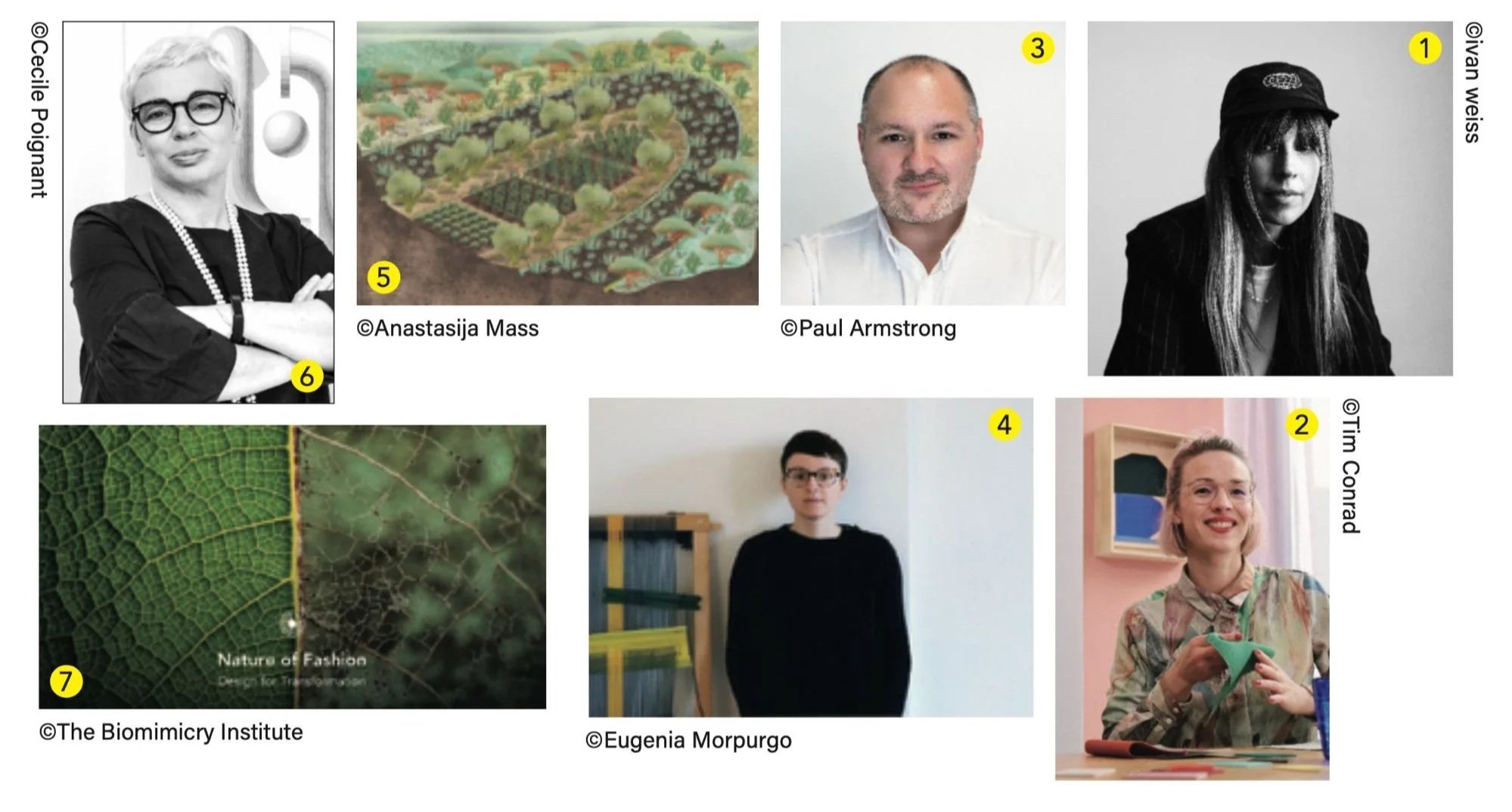
Solène Roure
“Beyond Greenwashing: Why Fashion Must Embrace Transparency" by Solène Roure Co-Founder of Circle Sportswear and Responsible Design Consultant
“2025 has been the most confusing year, the whole industry feels in flux. Marketplaces once thought too big to fail are closing, big brands are laying off thousands, and sustainable innovation has slipped down the priority list. The word sustainability has lost meaning. The good news? Change brings opportunity. I see hope in material companies like Balena, creating biodegradable plastics, or Modern Synthesis and Positive Materials, who are fighting against toxic materials and finding safer ways to make natural fabrics.
And when it comes to transparency, in Europe digital product passports will be mandatory mid-2027 and are in trial in Japan. These legislations are spreading globally. Brands will need to share with consumers what it took to create a garment. It's not just a technical shift, it's a cultural shift around understanding the impact of our purchases and what goes behind every single fashion product".
Alina Schartner
“Beyond the Visual: Colour and design fostering connection and competitive edge” by Alina Schartner - Design, Colour & Trend Consultant, Founder of Alina Schartner, Founding Member of The Forecast Club, Brand Ambassador RAL COLOURS.
“Care and collaboration defined 2025, offering hope in a world of permacrisis. At its heart, empathetic design nurtures. After decades of blandness mistaken for sophistication, a wave of soulful experimentation in colour, material and finish re-emerged: versatile pigments from once-stigmatised local resources like the coca plant, tactile weaves from regenerative fibres. Designers empowered communities by blending ancestral wisdom with innovation. Neuroscience confirms that beauty is functional; aesthetic and creative environments foster wellbeing and belonging. The next shift is multi-sensory healing, enriching daily rituals and shared spaces. Inclusivity matters, with sensory choice across minimalist, minimalist and maximalist palettes of colour, texture, taste, sound and scent.”
Paul Armstrong
On AI moving to cultural infrastructure by Paul Armstrong, Founder of TBD Group and curator of TBD+ .
“The innovation of 2025 was AI’s disappearance. When intelligence becomes infrastructure, it stops being “tech” and starts being cultural substrate. Fashion, media, and design already embed it without the required fanfare. The question is no longer if AI belongs in creative systems, but how we navigate the ownership and accountability it exposes. That’s the frontier for 2026.”
Eugenia Morpugo
“Embracing intentional uncertainties together” by Eugenia Morpugo, Designer researcher and co-creator of Syntropia, inspired by the Timelab article by the same title.
"While we need to shift away from petrol derivatives, we also have to be critical of the power structures and cultural models that the visions of regenerative futures and the use of bio-based materials are enabling. The design industry has been neglecting biocultural abundance in the name of an idealised efficiency, searching for certainties and enforcing few standardised resources around the world with violence. We are learning that working for and with biodiversity demands us to embrace the natural uncertainties of thriving complex ecosystems. In 2025 what is emerging is an approach focused on how we can do this through mutualistic and cooperative approaches rooted in practices of care for the landscapes and the communities that live within them."
Asha Singhal & The Biomimicry Institute
“On Embracing Regeneration in Fashion, Designing with Nature as a Mentor” by Asha Singhal, Project and Communications Manager, Nature of Fashion, Biomimicry Institute.
“Some of the most pioneering innovations are those embracing nature not just as a resource, but as a teacher. The shift from a 'take-make-waste' model to a 'breakdown-to-build-up' model signals a new paradigm where fashion aligns with ecological cycles. As highlighted in our Nature of Fashion report, true innovation means reimagining fashion as part of Earth’s living systems, where waste becomes food, and creativity is inseparable from regeneration. The future of fashion will be shaped by designs that work with, not against, life.”
Cecile Poignant
“On self-healing cities and living concrete” by Cécile Poignant, Creative Prospectivist shaping the futures of how we live, Keynote Speaker, Consultant, Professor and Mentor
For me, the development of self-healing concrete, which uses synthetic lichens, signals a growing change in vision regarding buildings. Our cities could be transformed into self-sustaining biosystems. Constructions could be capable of self-repair, self-evolve, and self-sustain with a minimum or human assistance.
Innovations of this form is focus on material intelligence. Sustainability is not an afterthought, but part of the core design. It challenges us to envision infrastructures able to withstand and transform with the passing of time, static, self-sustaining, and in symbiosis with the eco-centric paradigm of the future.”
Parting Thoughts
The future unfolds through quiet revolutions in concrete factories, design studios turned science labs and within communities doing the groundwork of systemic and cultural change. Boardrooms get attention, but transformation happens in spaces invisible to mainstream infrastructure until too urgent to ignore. While established systems crack, new forms of intelligence and resilience force through status quo fissures.
What strikes me most about our pioneers' reflections is their refusal to choose between pragmatism and idealism. They understand that authentic change requires unflinching honesty about where we are and bold imagination about where we're headed. Our era is nothing but linear like the charts we obsess over. 2025's volatility wasn't fashion's crisis; it was continued chrysalis, albeit an arduous one. Those who embrace these tensions, complexity and interconnected solutions, will invent tomorrow
By Geraldine Wharry