Creative Agency vs Automation

Image courtesy of Spur Magazine
The following article was originally published in SPUR magazine in my Tomorrow column.
The machine promised to replace us. Instead, it reminded us of what we are.
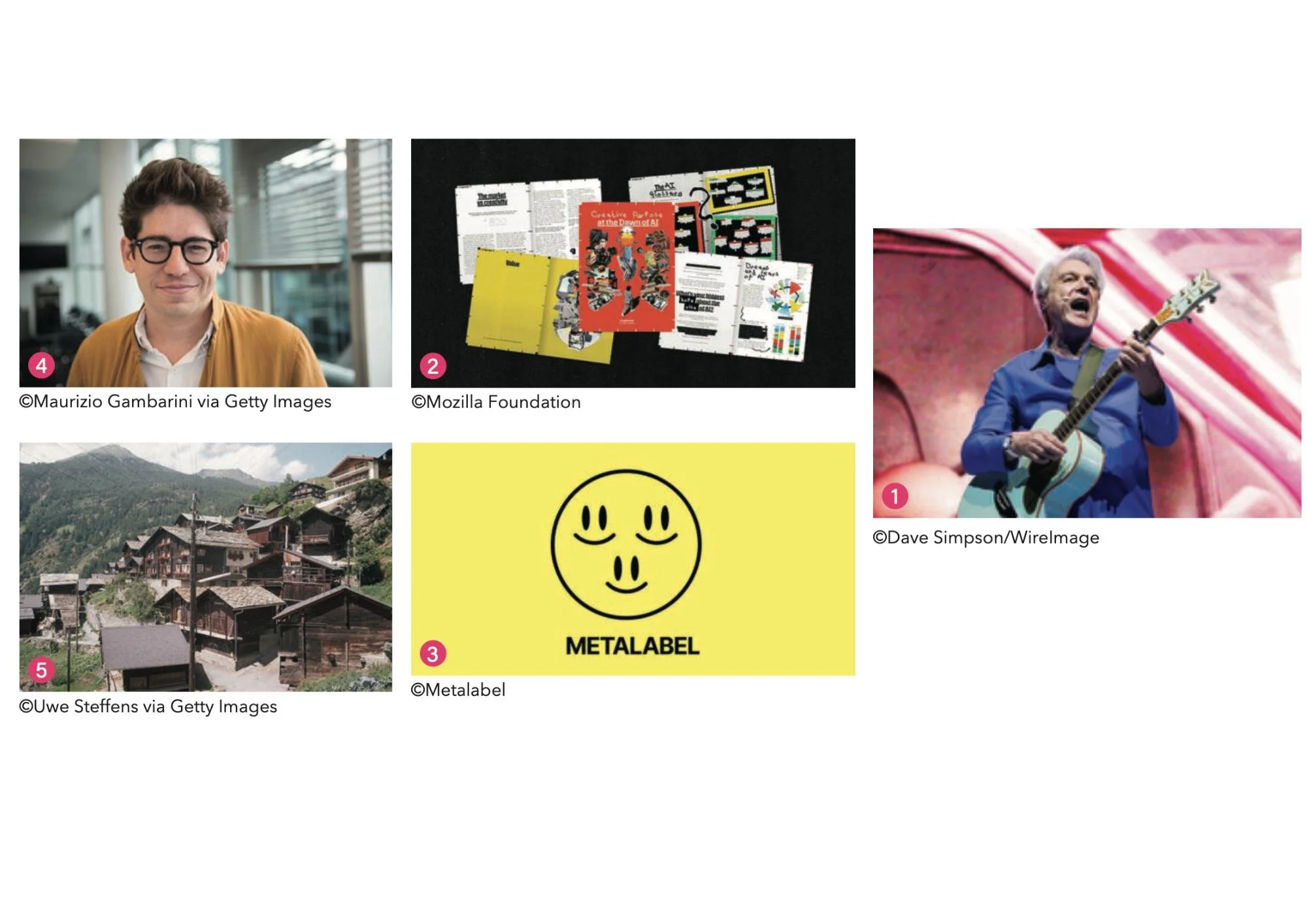
‘AI is sucking up all human knowledge, throwing it back at us and charging a price. What a thing to unleash’. This is David Byrne, founder of Talking Heads, speaking whilst interviewed for BBC Newsnight. Many corporations in the USA are laying off staff with predictions of 50% of white-collar jobs disappearing, forewarning what could happen worldwide.
Yet MIT research shows only 5% of AI pilots are extracting meaningful value for businesses and companies are now rehiring teams due to inefficiencies of AI implementations. Even with these red flags, there are no signs of slow down. No clear vision or policy to protect human workers and no communication from those in power on the plan for where AI is heading.
The Problem is Older Than AI
The greed, the lack of value for human creativity is not new. It's not AI's fault. Working in the creative industries, many of us have learnt to be underpaid by humans, not AIs. Fashion has historically been one of the most egregious offenders in this abusive system — an industry that has consistently undervalued its designers and over extracted the people making its products. Interns worked for nothing. Assistants were paid in 'experience'. Whole supply chains were built on abusive labour practices.
AI simply accelerates a logic that was already there: creativity as raw material, creatives as interchangeable parts. Brand strategy agency Nemesis coined the continuation of the existential and economic collapse of the creative industries 'The Creative Recession'. In an era where wealth is concentrated in fewer hands than at any point in living memory, where tech oligarchs compete to strip margins from every industry they touch, the economics of creativity have become brutally clear. We measure creativity against the output rate of a machine. The market doesn't care about the years you spent developing your eye, your voice, your craft. It cares about what it can extract from you, as cheaply and quickly as possible.
The Fork in the Road
The Mozilla Foundation’s report ‘Creative Purpose at the Dawn of AI’ asks the right question: “What AI companies make us think: you only lose if you don’t play. What we should actually think: who makes the rules?”. It’s a provocation worth sitting with. Underneath the AI debate runs a deeper, older tension: who holds power over creative work, and who benefits from it? AI has forced the creative industries to ask itself hard questions about their relationship to AI, how it plans to safeguard its cultural value, workers, and contributions to the economy.
I keep returning to a distinction made by cultural analyst Sean Monahan I read in the Mozilla report: ‘cultural products relying on small networks composed of tight bonds — creative communities — will still require humans. Cultural products relying on large networks of weak bonds — mass entertainment — likely will not.’
Counter rules are being created, because history works in elastic effects. An emergent set of creatives and artists are taking action by building collectivist infrastructures that foster creative, legal and economic agency in the age of AI, and ensure their future isn’t reduced to ‘vibe coding’.
Why artists and creative pioneers are becoming systems architects
Outside the very public spectacle of AI and its multitude of startups, investments and big tech launches, artists and creatives are now acting as system architects — building technology, internet platforms, coalitions, legal structures and economic models for a different future. What we are witnessing is the emergence of new institutions, not just cultural laboratories. Here is what that looks like in practice.
Scale does not hold meaning is the founding vision Metalabel is built upon. Internet-based groups, not individuals, it argues, is how social value and power will be created. An Ecosystem for this is being built described as ‘groupcore’: software, tools, economics, spaces, and ideas that help creative people cooperate. Dark Forest OS, is their recently launched infrastructure of private internets for ‘creative groups to hang, plan, and make meaning and money together’ and retreat from the open internet into smaller, gated communities of trust. Metalabel turned a coalition of artists and technologists into policy makers and in March 2026 helped pass the Colorado Artist Company Act. It gives artists and creative people rights that corporations have always had with Artist Corporations, a new type of business where artistic control, IP protection, collective ownership, and a creative mission are embedded into the default legal and financial structure.
To take power away from Big Tech and commit to AI that puts people and the planet first, Humanity AI is joining the chorus. As a $500 million coalition of 10 foundations, Humanity AI directs capital toward public AI infrastructure, labour protection, democratic values and creative agency. In the fashion industry there are currently no such coordinated efforts, though adjacent industries are leading the way. Yet we’ve seen the recent launch of Creators Coalition on AI uniting Hollywood Insiders from Oscar winners, filmmakers to show runners, writers, and creative professionals “to establish shared standards, definitions and best practices as well as ethical and artistic protections for if and when AI is used in entertainment projects.”
Responding by creating collectivist infrastructures in which humans can rally around shared values and economic goals isn’t new but was often tied to natural resources such as land and water. With AI taking over entire industries, we now see Human creativity as a resource we must protect. The Commons is an ancient but newly rediscovered model for collective governance and management of resources. “A commons is a bounded community of shared purpose that stewards its collective wealth with self-devised rules of care, fairness, and mutual benefit.” states author David Bollier. One of the most remarkable examples of democratic resource self-management in the world remains the village of Törbel in Switzerland which has been sustainably managing their alpine forests, meadows and irrigation waters since 1483.
Parting thoughts
What is fashion in a world where creativity is worth nothing? Fashion has always been, at its best, a form of cultural leadership — an industry that reflects back to us the spirit of a moment. The creative industries – of which Fashion is part of – are undergoing both crisis and metamorphosis. Focusing on microtrends and the attention economy feels deeply antiquated. AI is an infrastructure that needs to be met with systems thinking and redesign. I shared this in 2022 and continue to stand by this: to operate in a future making mindset Think In Systems Not Trends.
By Geraldine Wharry